Rules & Criteria
Rules & Competition Criteria
An overview of the competition divisions, judging criteria and participation requirements of the Massage Championship World Tour. Full details will be published on this site once confirmed.
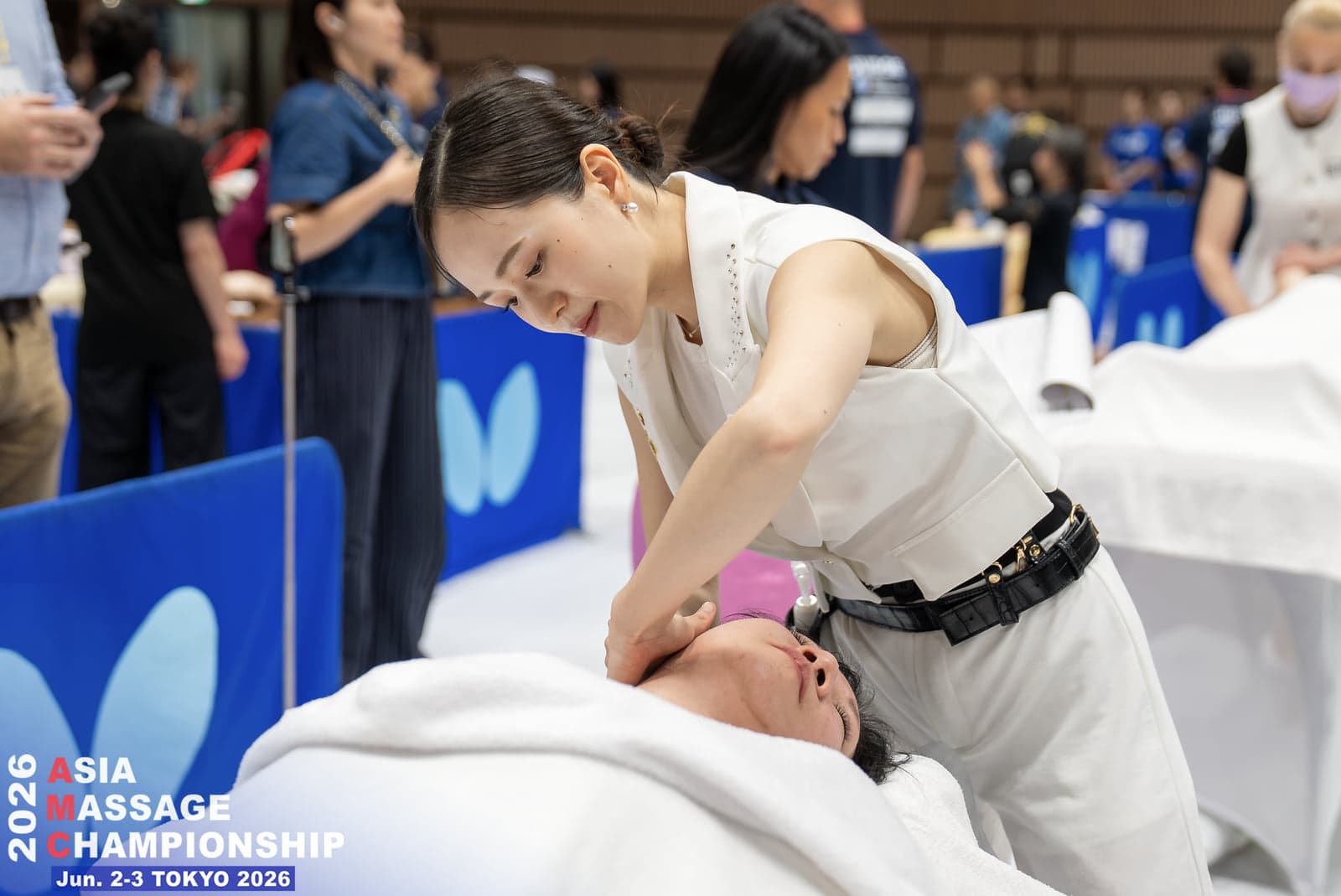
Competition divisions (six in total)
Competition is held in six divisions: Oil, Traditional Thai, Body Care (Stretch), Facial, Freestyle Western and Freestyle Eastern.
Oil
Aromatherapy, lymphatic drainage, Swedish massage, Hawaiian lomilomi, Balinese, Esalen massage and more
Traditional Thai
Chiang Mai style, Bangkok style, Wuo Thai, Warrior Thai, Ruesi Dat Ton and more
Body Care (Stretch)
Seitai massage, body care, shiatsu massage, deep tissue massage, stretching, sports massage and more
Facial
Aesthetic facial, face lifting, gua sha, facial spa, head massage, decollete massage and more
Freestyle Western
Treatment using Western-originated manual techniques centred on Western anatomy and fascial release: Swedish massage, deep tissue massage, sports massage, myofascial release, trigger points, stretching and more
Freestyle Eastern
Treatment using techniques originating in the East and Asia, drawing on the concepts of meridians, qi and acupoints: shiatsu, Chinese tuina, foot reflexology, traditional Thai massage, hilot, Ayurveda, Balinese massage, cupping, kolgi (bone massage) and more
Which division fits your technique?
A guide to which division descriptions mention common techniques. A technique listed under two divisions appears in both descriptions. If you are not sure which division suits you, please contact us.
| Technique | Divisions that mention it |
|---|---|
| Traditional Thai massage (นวดแผนไทย) | |
| Swedish massage | |
| Lomi lomi, aromatherapy, lymphatic drainage | |
| Ayurveda (Abhyanga) | |
| Seitai, body care | |
| Stretching | |
| Shiatsu | |
| Sports massage, deep tissue | |
| Myofascial release, trigger points | |
| Tuina, foot reflexology, acupressure, cupping | |
| Facial, gua sha, head massage |
Acupuncture, moxibustion and anything else that pierces the skin or applies heat are outside the competition (only hands-on technique is judged). For other tools, please contact us. Contact us
Eligibility
Do I need a massage licence or qualification?
No particular years of experience or qualifications are required. Anyone aged 18 or over who can perform a 30-minute treatment without stopping can enter. See the Participant Rules for details.
For continuing education credits (CEU) or recognition under your country's licensing system, please contact us. Contact us
How judging works, at a glance
From entry to final placings, in one diagram. Each step is explained in more detail further down this page.
Entry
Each person may enter up to two categories
Competition
Consultation, then a 30-minute treatment. Up to 15 at a time; fellow competitors take turns as recipients
Scoring
Judges score the 8 criteria, each out of 10
Totalling
The scores of the judges who gave the highest and the lowest are excluded; the rest are totalled and averaged
Placings
Placings are decided per category. Ties are broken in a set order
Judging criteria (8 items)
Judges score each item out of 10. Massage technique is assessed as a whole, from a number of different angles.
- Massage technique (skill)max 10
- Treatment areamax 10
- Posture during treatmentmax 10
- Treatment flowmax 10
- Anatomical approachmax 10
- Innovative ideasmax 10
- Hospitality for the clientmax 10
- Impression evaluationmax 10
Massage technique (skill)
Treatment area
Posture during treatment
Treatment flow
Anatomical approach
Innovative ideas
Hospitality for the client
Impression evaluation
Entry Requirements
- Complete registration and payment of the entry fee by the entry deadline.
- Choose the categories you will compete in (one to two per person).
- You take part on site at the venue (Yoyogi National Gymnasium, Second Gymnasium).
- Comply with the competition regulations and venue rules.
Competition Flow & Venue
The flow of each round and an overview of the venue facilities on the day.
How the competition runs
Pre-Treatment Consultation
Divisions entered
Venue Facilities
- Up to 15 treatment beds are set up in the competition area.
- The beds have headrests and are height-adjustable.
- Mats are also provided.
- The venue is the Yoyogi National Gymnasium, Second Gymnasium (2-1-1 Jinnan, Shibuya-ku, Tokyo).
Rules of Participation
Basic rules regarding what to bring, attire, and conduct during the treatment.
- Bring your own equipment, such as sheets, towels, oil, and treatment tools.
- Wear something you can move in and that suits treatment work; avoid anything overly revealing. Shoes must have clean soles, and working barefoot is also allowed.
- The recipient must wear underwear at all times during the treatment and keep the chest covered.
- Participants may take photos and video, provided it does not disturb other competitors or the judges. Please refrain from filming outside the competition itself, and in changing areas.
- Insurance is each participant's own responsibility.
- Participants who do not speak English may bring an interpreter arranged by themselves.
- All participants serve as both giver and receiver of treatment.
- Manipulative techniques such as chiropractic and osteopathy are prohibited.
- The music played during treatment is provided by the organizers. The use of earphones and similar devices is prohibited.
Code of Conduct
Our policy on the dignity competitors must uphold.
We take a zero-tolerance stance toward inappropriate contact or treatment that could be perceived as sensual. Any such conduct, if confirmed, results in disqualification, with no exceptions.
Judging & Final
The final is scored by several specialist judges.
- Therapists working at the forefront of each category
- People from industry bodies and training schools
Judges are selected from therapists working at the forefront of each division and from industry bodies and training schools. Scoring follows the eight judging criteria.
On Judging & Records
Our policy on handling results and on publishing competition footage.
- Judge who gave the highest scoreExcluded
- Other judgesCounted
- Judge who gave the lowest scoreExcluded
Total the rest and average = final score
- Final score
If tied
Impression evaluationIf tied
Massage technique (skill)If tied
Innovative ideasIf tied
Posture during treatmentIf tied
Treatment flow
Scoring method
In the event of a tie
Recording and Publication
Participation Formats
The championship is held on site at the Yoyogi National Gymnasium, Second Gymnasium. There is no online participation.